
Does an Inverter AC Need a Voltage Stabilizer? The Ultimate Guide
Investing in an inverter air conditioner is one of the smartest ways to beat the heat while keeping your electricity bills in check. Most modern inverter ACs come with an attractive marketing promise: “Stabilizer-Free Operation.” But does “stabilizer-free” truly mean your expensive appliance is 100% safe from power fluctuations?
If you live in an area prone to frequent voltage highs and lows, power cuts, or surges, the short answer is: No, your inverter AC isn’t entirely safe without one. Let’s dive into the science of how inverter ACs handle power, what “stabilizer-free” actually means, and whether you should spend a little extra to protect your investment.
Understanding `the Technology: How an Inverter AC Handles Voltage
To understand why voltage matters, we have to look at how an inverter AC operates compared to a traditional fixed-speed AC.
The PCB: The “Brain” of Your Inverter AC
A traditional AC turns its compressor completely on or off to regulate temperature. An inverter AC, however, uses a variable-speed compressor. It continuously adjusts its speed based on the cooling demand, making it incredibly energy-efficient.
To achieve this precise control, inverter ACs rely heavily on a highly sophisticated electronic circuit board called a Printed Circuit Board (PCB). The power flow moves sequentially through these steps:
Incoming AC Power (Grid) → Rectifier → converted to DC Power → Inverter Circuit → converted to Variable AC Power → Compressor
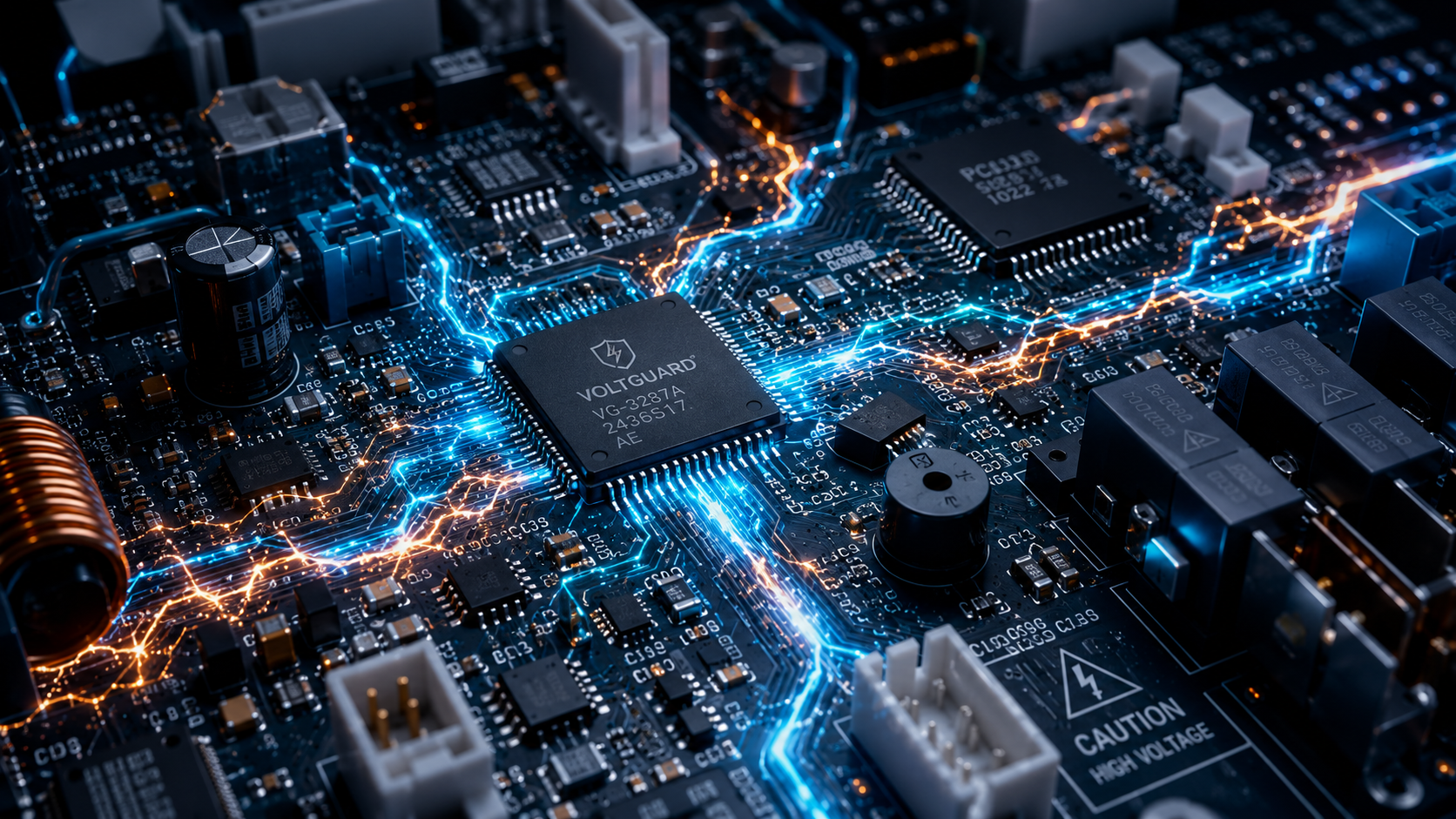
While this technology is highly efficient, the complex microprocessors on the PCB are exceptionally sensitive to voltage anomalies. If the incoming voltage fluctuates violently outside the operational threshold, the PCB faces a high risk of burning out.
What Does “Stabilizer-Free Operation” Actually Mean?
Most leading appliance manufacturers state that their inverter ACs have built-in stabilizer-free operation. This simply means that the AC’s internal compressor can tolerate a specific, pre-defined range of voltage fluctuations without tripping or sustaining damage.
Typically, this safe operational range spans from 150V to 264V (or up to 130V to 290V in premium models).
The Limit of Built-In Protection
- Within the Range: If your home’s power drops to 160V or spikes to 250V, the AC’s internal mechanism adapts, and the machine keeps running smoothly.
- Outside the Range: If a severe surge hits your grid and pushes the voltage to 300V, or a major drop plummets the voltage to 110V, the built-in system fails to protect the appliance.
When the voltage breaches these extreme thresholds, the internal components either shut down abruptly or, worse, the high voltage fries the delicate PCB.
Stabilizer-Free vs. External Voltage Stabilizer
| Feature / Scenario | Built-In “Stabilizer-Free” Capability | External Voltage Stabilizer |
| Typical Protection Range | Narrow to Moderate (150V – 264V) | Wide to Extreme (130V – 300V) |
| Response to High Voltage Spikes | May fail or burn the internal PCB | Cuts off power safely before it reaches the AC |
| Cost of Component Replacement | High (Replacing an AC PCB can be incredibly expensive) | Low (The stabilizer takes the hit; easily repaired or replaced) |
| Ideal Environment | Cities with highly stable power grids | Areas with frequent power cuts or fluctuating grids |
The True Cost of a Fried PCB
If an external voltage stabilizer costs a fraction of the price of a new air conditioner, why do people skip it? Mostly because they assume the manufacturer’s warranty covers everything.
Here is the catch: Most brands explicitly state in their warranty terms that damages caused by external power surges, lightning hits, or abnormal grid fluctuations are NOT covered under warranty.
If your AC’s PCB gets fried due to a voltage spike:
- You will have to pay out of pocket for a replacement.
- The repair cost for an inverter AC PCB is significantly higher than that of an older, non-inverter model due to complex integrated circuitry.
- Your AC could be out of commission for days during the peak of summer while waiting for parts.
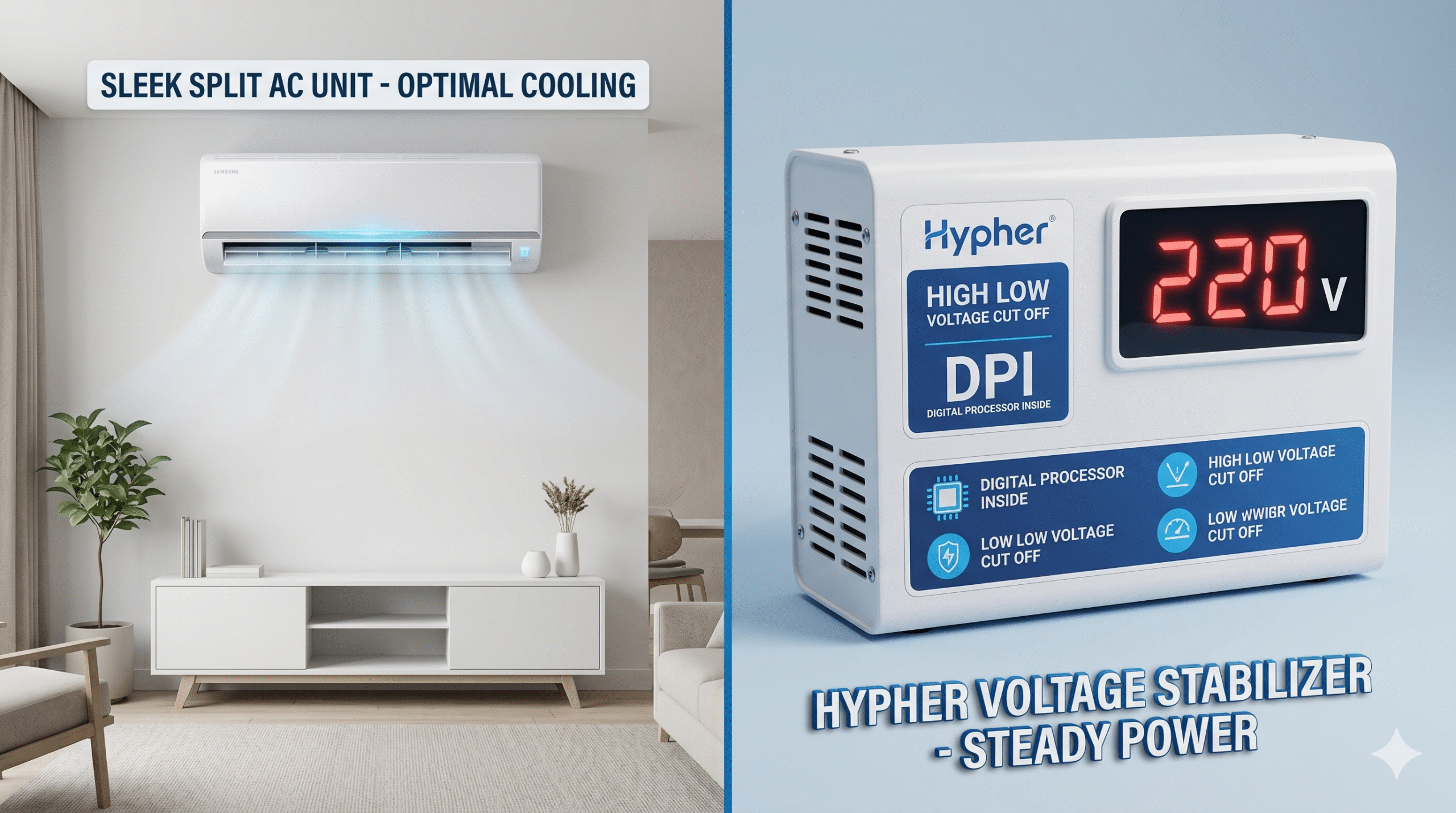
An external stabilizer acts like an electrical insurance policy. If an extreme voltage anomaly occurs, the stabilizer absorbs the shock or cuts off the power supply entirely, sacrificing itself to keep your expensive air conditioner pristine.
Final Verdict: Do You Need To Buy One?
To make the right choice for your home, evaluate your local power grid conditions:
Skip the Stabilizer If:
- You live in a metropolitan area or a modern township with an incredibly stable power grid.
- You experience zero to minimal voltage drops (lights dimming) or frequent power cuts.
- Your AC manual clearly states a wide protection range (like 130V – 290V) and your local power never behaves erratically.
Absolutely Buy a Stabilizer If:
- You experience frequent power outages, lightning storms, or visible voltage fluctuations (like fans slowing down or lights flickering).
- You live in an area close to industrial zones, commercial complexes, or rural sectors where power loads shift drastically.
- You want absolute peace of mind and want to protect a premium, high-tonnage (1.5 Ton / 4 kVA or above) inverter AC from unexpected grid behavior.
Recommendation: When choosing an external stabilizer for an inverter AC, ensure you buy a digital stabilizer explicitly rated for your AC’s tonnage (e.g., a 4 kVA stabilizer for a 1.5 Ton AC) that features both Low/High Voltage Cut-off and a Smart Time Delay System to allow the compressor to equalize pressure before restarting